Keynote topic
Firefighter Leadership Keynote Speaker - George Stern
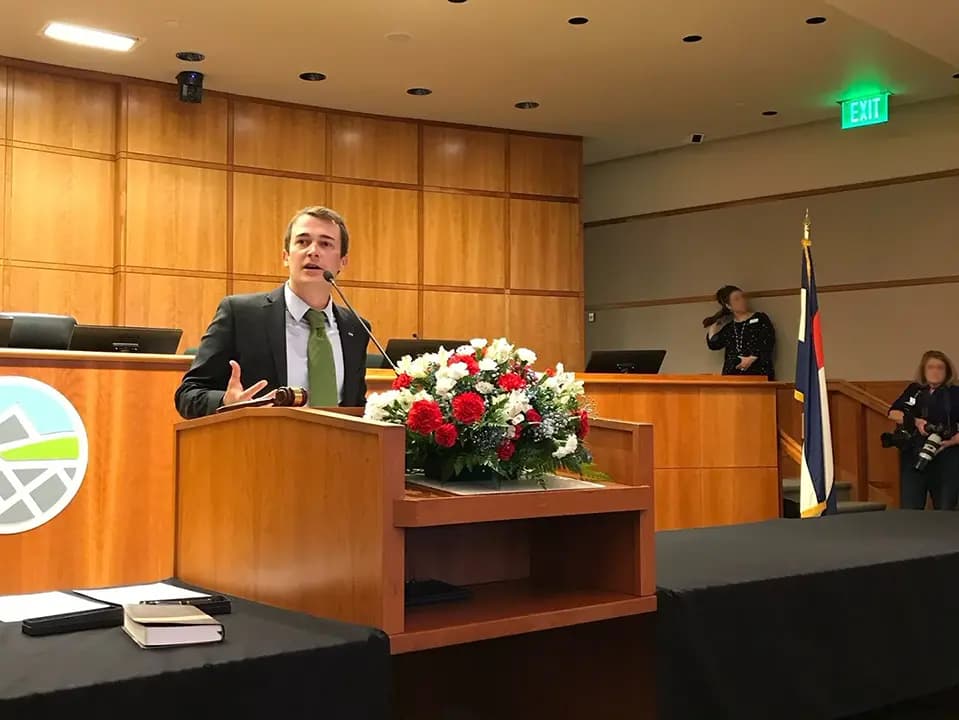
George Stern works as a volunteer firefighter at Aspen Fire Protection District and is the keynote founders book when they want leadership-under-pressure that does not collapse into motivational theatre. The Apex Fire above Lookout Mountain is his anchor scene. Audiences leave with the operating habits a firehouse uses to make calm look ordinary.
George does not reach for the firehouse as a metaphor at the end of a slide deck. He works the firehouse as the operating system the keynote is built on. The room leaves with the actual transfer to a company – prepare before pressure, solve the actual problem in front of you, debrief without ego. The credibility flip lands because the firefighter is also the former elected official, the Harvard Law magna cum laude graduate, and the McKinsey alum. The reps were not the consolation prize. The reps were the school.
Or reach the team directly — GeorgeStern@clash.cc






Why the right voice
Why a working firefighter, and not another leadership consultant
George is an active volunteer firefighter at Aspen Fire Protection District. He is also a former elected Jefferson County Clerk and Recorder running a 115-person agency, a Harvard Law magna cum laude graduate, Obama White House Counsel's Office alumnus, McKinsey alumnus, and now CEO of G&P LLC, which acquired a mid-seven-figure US digital agency in January 2026. The firehouse is where the leadership material was pressure-tested. The boardroom is where it shipped.
- Harvard Law
- Obama White House
- McKinsey
- Former elected official
“One of the most talked-about moments of the offsite.”Jeff Haars, VP, Amentum (NASA contractor)
On stage
The first five seconds decide the call.
A firehouse story that lands the same in your boardroom. George teaches emotional intelligence as an operating skill — pause, understand what’s actually happening, respond with clarity. Not about being soft; about not letting ego make the next decision.
What the room walks away with
Tools the audience uses the next morning.
The room leaves with three habits a firehouse cannot fake. Prepare before pressure – the work that decides a call is done weeks earlier, in drills nobody sees. Solve the actual problem in front of you – the one the room is pretending not to see, named out loud, in the language the floor uses. Debrief without ego – every call gets reviewed, ranks step down at the table, the next call is better because the last one was named honestly. Senior leaders leave with the calibration for their own week. Managers leave with a debrief format they can run on Monday without a facilitator.
- 01
The Apex Fire ' we are really good at this ' scene as the working definition of command competence.
- 02
How a firehouse prepares before pressure, and what the same discipline looks like in a Monday operating cadence.
- 03
A debrief-without-ego format senior teams can run themselves after every hard week.
- 04
The credibility flip - why the firefighter credential is the one that earns the right to be direct.
- 05
Concrete language for naming the actual problem in front of the room, not the comfortable one.
The contrarian bit
Why most firefighter keynotes go wrong
A slide of a burning building, a story about courage, a soft pivot to "and that is leadership." The room nods. Nothing transfers to Monday. A firehouse keynote that treats the firehouse as an aesthetic has missed the point – the firehouse is an operating model that has been pressure-tested in conditions a boardroom is not allowed to simulate.
George opens at the Apex Fire above Lookout Mountain. He was on the line, watching his crew work compressed-language leadership in real time, and the thought that landed was "we are really good at this." The crew was competent, not brave. The keynote works the gap between command performance and command competence – the gap most companies live inside and most leadership talks paper over.
In the operating week that follows, the senior team runs debriefs without ego. Managers name the call before they make it. The rehearsal of leadership gets separated from the practice of it. The credibility flip – firefighter on shift, also McKinsey alum and Harvard Law graduate – earns the directness the room actually needs.
Questions
Leadership Lessons from the Firehouse — booking George.
Yes. George reads the brief with the buyer – what "under pressure" looks like in your operation, the rehearsal habits that have crept in – and adjusts the anchor scenes. A founder offsite gets a different cut to an emergency-services audience or a public-sector summit.
Still deciding? Talk it through with the team.
Other topics George speaks on
- Generational Leadership Keynote Speaker - George Stern
- Leading Under Pressure Keynote Speaker - George Stern
- Change Management Keynote Speaker - George Stern
- Government Leadership Keynote Speaker - George Stern
- Practical Leadership Keynote Speaker - George Stern
- Frontline Leadership Keynote Speaker - George Stern
Booking
Bring this keynote to your team.
In-person, US · virtual & workshop formats on request · the team replies within 24 hours.
Back to George’s full profile“One of the most talked-about moments of the offsite.”— Jeff Haars, VP, Amentum (NASA contractor)
Represented by Clash Creation · clash.cc